








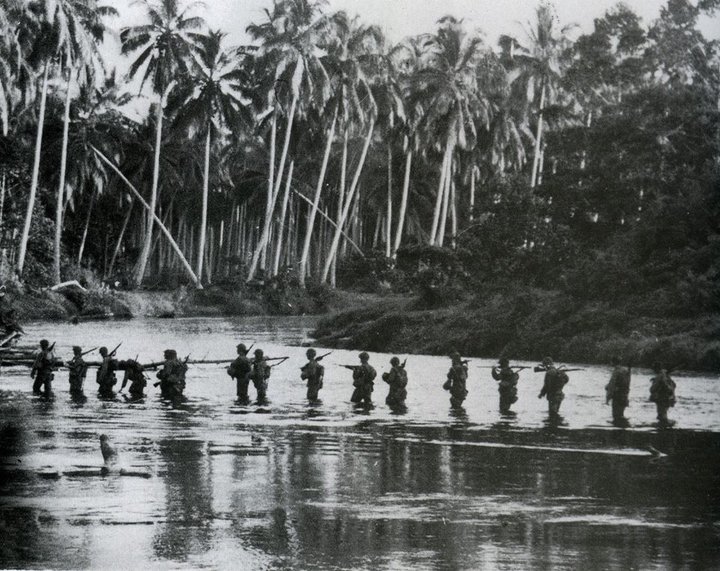
In mainstream history, the War in the Pacific of 1941-45 is an American-Japanese affair. But how did the Japanese choose to fight a total war with America? In face of growing menace of Western imperialism of the 19th century, Japan responded with a bold strategy: to join the ranks of the great powers. They considered themselves a young nation, and looked up at the European great powers as role models. The Japanese eagerly learnt to play by the rules of the great game. From the late 19th century, they ventured overseas to test their own ability to survive in the competitive environment of international great games.
Colonising China was a logical step. As China was powerless in face of British, German and Russian imperialism, Japan's security could be obtained either by propping up China or by colonising it. The Americans chose to help China for the sake of their commercial interest and anti-imperialistic principles. (From the Chinese point of view, they were merely meddling!) Japan followed the second. Still enmity between them did not develop at first, as Americans considered Japan as a potential victim of European imperialism, which needed their protection. They realised that Japan was not heading a right direction soon after Japan managed to defeat Russia in 1905. But soon, the whole framework of international relations went through a radical overhaul. WW1 resulted in destructions of four European empires: the German, Austro-Hungarian, Russian and the Ottoman empires were all extinguished. The winners, Britain and France, were so exhausted economically and financially (Britain, for example, was borrowing money from Egypt!), their expansive energy and confidence were gone. As a result, suddenly, Japan rose to the first division of the great power club. Symbolically, the Washington Naval Treaty of 1921-22 considered Japan as the third largest naval power, next only to the British Empire and the US. (Then, the number of battleships determined your place in the world.) This rapid rise from being an obscure and unknown Asian country to a first class world power naturally affected Japanese self-image and confidence. They were beginning to think that they were the most superior race, on a par with the Anglo-Americans. By contrast, China's fortune hit the rock bottom. The country was in turmoil: the old Chinese Empire, powerless in face of Europeans and even the Japanese, lost its credibility. The new republican regime born out of the revolution of 1911 was still fragile. During WW1, Japan, taking advantage of European preoccupation with the war, demanded the Chinese government to accept some humiliating terms giving up concessions and trade privileges to Japan. The Chinese were incensed, but in face of Japanese military might, they had no choice but to acquiesce.
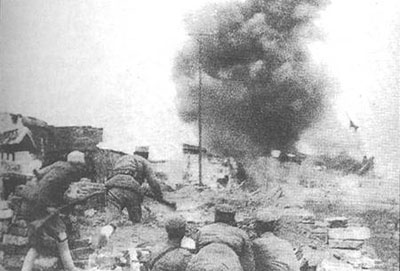
One good thing about your country's fortune hitting rock bottom is that there is only way up from that point on. Now the country was in civil war, but new forces seriously contesting for control of China were emerging (i.e., the Nationalists and the Communists). On the other hand, Japan began to struggle to maintain its newly won position. Soon after the end of WW1, its fragile economy was exposed; the massive earthquake that destroyed Tokyo in 1923 also exacerbated the problem. Society was in turmoil, as the gap between the rich and the poor widened, with social policies lagging behind. Food riots were rampant. The ruling class genuinely feared a Socialist revolution. Finally, with the onset of the Great Depression in the 30s, the fact that Japan was still a 'work-in-progress' nation was all too plain to see. For Japan's democracy was still primitive. In time of difficulty, politicians failed to act wisely and decisively, making the frustrated populace back a wrong kind of people: the army. The army believed that formerly colonising northern chunk of China, which was in a state of anarchy, was the only practical answer to Japan's economic and social woes and strategic problems. They also thought that what they were doing was no different from British colonial intrigues. Except that the Chinese were not willing to live under the Japanese. The Japanese, on their part, looked down on the Chinese as a subservient race and considered them as inferior to them in any conceivable way. So, when the Japanese launched a full-scale invasion in 1937 (they were alarmed by the growing power of the Nationalists), they were surprised by the fierce resistance of the German-trained Chinese forces defending Shanghai. These were equipped with much better German and Czech weapons and inflicted considerable casualties on the invading Japanese troops.
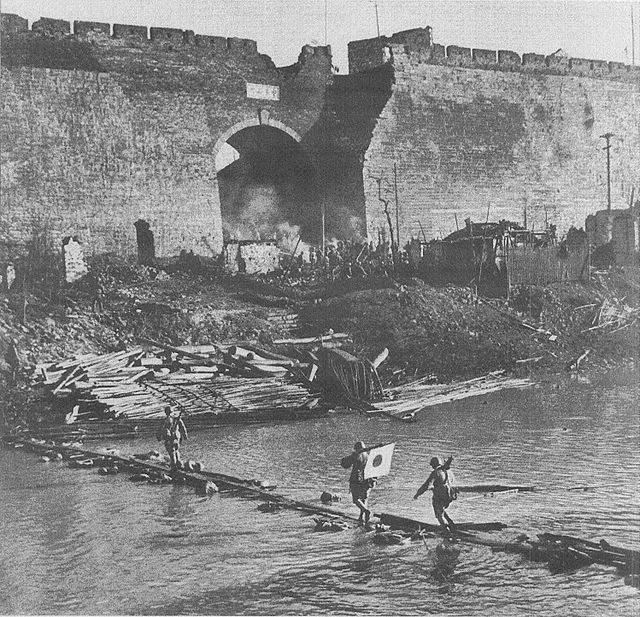
Not just tactically but politically also, the Chinese will to resist was far more tenacious than the Japanese expectations. The Nationalists even concluded a truce with the Communists to concentrate on the war with the Japanese. A tragedy this directly or indirectly caused was the infamous massacre at Nanking. It was a classic case of soldiers going wild after a difficult siege; with the surprisingly primitive logistical system of the Japanese army, the soldiers on the front line were starving and suffering mounting losses. So, they were not in a mood to show mercy after taking the city. The scale and the nature of this atrocity have been disputed by the Japanese and the Chinese. It is, however, fairly obvious that the Japanese high command were responsible at least partially. The fall of Nanking did not end the war. The Japanese tried terrorizing the populace by aerial bombing and brutal scorched earth tactics but these only stiffened the Chinese resistance. It is estimated that between 1937 and 1941, as many as 300,000-400,000 Japanese were killed (Chinese losses were at least several times of this figure.) Instead of blaming their own arrogance, short-sightedness, poor intelligence and inept planning, the Japanese army developed utter hatred to Britain and America, as they were giving the Nationalist Chinese morale and material support. Still, at first, they knew that they could not fight China and the Western nations simultaneously. They tried to seek diplomatic solutions, but they did not want to admit that they made a mistake to their own public. They needed a face-saving decisive victory, which was denied to them. The Japanese were sucked ever deeper into the quagmire.
The hope now was Nazi Germany, ironically enough. In 1940, it looked as though Germany was about to win; with Britain, France and the Netherlands either already defeated or busy fighting Germany, they figured, they could seize their colonies to get oil and other war materials. The US response was trade sanctions; then it moved its Pacific Fleet to Hawaii to send a strong message that it was serious. This move, instead of making the Japanese act sensibly, cornered them psychologically: there was no way out now. Rather than accept a humiliating climb-down, they chose war with America, regardless of consequences. The Japanese felt that they were already losing a contest to control the Western Pacific with the US anyway. It was a gamble: hit the US hard and hope the US public opinion would stop the American government. Some became victims of their own propaganda: saying that the Americans were soft, they really began to believe that, only to find out the sheer determination of the US public to defeat Japan utterly. Japan needed was experienced diplomats and strategists. Unable to find an exist strategy from the stagnant war they ended up starting another unwinnable war. Tragic.