

An Examination of Political Agitation in the American Colonies
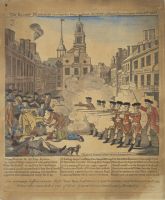
Wars thrive on cash and after fifty years of war, Great Britain was on the verge of losing its empire. The Seven Years' War was the latest conflict and it had exhausted the British treasury. In order to recoup these substantial losses, it was considered prudent to levy taxes in British North America. Since they had benefited from the outcome of the war, it was only right that they help to alleviate the fiscal blow too. The problem, however, was that the American colonists were treated as second class citizens. To make matters worse, when representatives questioned the legality of these new taxes, their concerns were largely ignored. What the American colonists desired, above all else, was to be treated as an equal partner. Such status would include being consulted about the implementation of prospective tax duties rather than having them imposed and mercilessly enforced by government agents.
The political unrest throughout the colonies was simply the only recourse that the American colonists could exercise. This was not an ideological struggle but more a concerted effort to reach an understanding with an indifferent British government. The American colonists did not see themselves as anything but British. Many colonists were confused and a popular wave of resentment took root in the 1760s. Regardless of the official stance of the British government, most Britons looked upon their trans-Atlantic neighbors as fellow Englishman.
Stephen Conway, in his article From Fellow Nationals to Foreigners: British Perceptions of the Americans, circa 1739-1783, notes that "the colonists embraced a new identity-that of Americans-only reluctantly into response to the refusal of successive British governments after 1763 to recognize and accommodate their desire for what they saw as the full rights of Britons."1 a genuine desire to be recognized and accepted as British citizens dominated the hearts and minds of American colonists in this period. Why they were repeatedly rebuffed by the British crown puzzled them exceedingly. Lawrence James draws attention to this fact, "what was perhaps most perplexing to Americans, faced with what was an arbitrary view of their status, was that they were excessively proud of their Britishness."2 Conway and James emphasize this undercurrent of feeling. The American colonists believed themselves to be British. Geographical orientation did not detract or diminish one iota their identity as British subjects. This 'identity crisis' has been a subject of debate in recent years. According to Conway, this reevaluation of political loyalties and self-perceptions by the American colonists has led to a rise in revisionist interpretations. A reappraisal of American colonists' allegiance and vociferous declarations of British identity have led many historians "to interpret the American Revolution as a crisis of integration rather than disintegration."3
The vast majority of British subjects saw the American colonists as Englishman too. Even during the peace negotiations after the American Revolution, the Earl of Shelburne "continued to harbor hopes of a constitutional connection with the Americans even as he negotiated the peace treaties, and in the years immediately after the war of Independence he sought to give the United States a special position in trade with Britain and his remaining colonies, which would effectively have allowed the Americans to continue to enjoy the status of Britons for commercial purposes."4To complicate the matter, observes Conway, "Many of the English were also reluctant to embrace British-ness, preferring in speech and writing to use "England" and "English" where "Britain" and "British" would have been more appropriate."5 A common identity was shared by British subjects both at home and abroad, even if that identity was less clear and misunderstood.
The American colonists shared a common history, religion, language, and blood with their British counterparts – a fact unquestioned by all except those of Parliament. Furthermore, it was the idea of liberty, especially British liberty, which bound and governed the conduct of British subjects. "It emphasized well-established legal protections for the subject, such as trout by jury and previous corpus. It also gave prominence to the vital role of representative institutions as safeguards for freedom from arbitrary government . . . To Americans, as was to become evident over the next decade, their assemblies where the local equivalents of the British Parliament and at the same function and protecting the liberty of the King's subjects."6 It was this rule of law, harkening back to the Magna Carta that the Americans were appealing to. They were proud of their distinguished legal history and proceeded accordingly when they mounted protests, boycotts, and sanctions. The First Continental Congress delicately balanced Colonists' complaints and cries for action with allegiance to Britain and the rule of British law. This debate is described in detail in Neil York's The First Continental Congress and the Problem of American Rights7.
The American colonists loyally fought alongside British troops in the War of the Austrian Succession and the Seven Years' War. It was the American contribution to the Seven Years' War, however, that may have led to a souring of relations between Britain and the American colonists. "Several historians have highlighted the friction between British army regulars and American provincials during the fighting in North America between 1755 and 1760," notes Conway, "and suggest that it had a detrimental long-term impact on relations between Britons and Americans8." Despite the strains experienced by both sides due to consecutive wars in multiple theaters of war, a sense of community and solidarity prevailed among the common person. It was noticeably different among the British aristocracy. In 1763, a somber Lord Halifax described the American colonists not as 'British subjects' but as "foreigners9." A changing attitude was beginning to voice its discontent toward the wayward colonials but it did not permeate all of the upper echelons of British society.
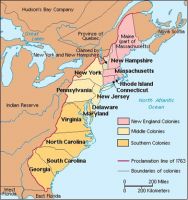
And the Declaration of Independence had little effect upon relations with Great Britain. Such a treasonous document should have ignited Anti-American feelings but it was "treated with remarkable likeness primarily because it seemed unimportant10." During the early years of the American Revolution, the British openly lauded the professional character of the Army, transformed under the watchful eye of Baron von Steuben. George Washington was also highly esteemed among the British as a respectable man – many, indeed, admired the man as the personification of an English general. The unpardonable sin, however, was when the American colonists entreated the French and formed an alliance in 1778. It was this act that deeply wounded the consciences of the British people toward the Americans. To offer friendship and broker an alliance with a sworn enemy was behind comprehension. It must be remembered that the French were the root cause of the last hundred years of war in Europe and throughout the Empire. Conway believes the issue is even deeper: "but, above all, it seems that it was the Association of the Americans with the French that led to a reevaluation of the Americans – a reevaluation that turned them into a separate people11." This single act of treachery was unforgivable and the Americans showed their true colors – they were Americans now.
1. Stephen Conway. "From Fellow-Nationals to Foreigners: British Perceptions of the Americans, circa 1739-1783." William and Mary Quarterly, 59 (Jan. 2002) 65
2. Lawrence James. The Rise and Fall of the British Empire. (New York: St. Martin's press, 1994) 100
3. Conway, 65
4. Conway, 67
5. Ibid, 72
6. Ibid, 76
7. Neil York. "The First Continental Congress and the Problem of American Rights." The Pennsylvania Magazine of History and Biography, 122 (Oct. 1998)
8. Ibid, 80
9. Ibid, 83
10. Ibid, 87
11. Conway, 96
Bibliography
1) Robert Middlekauf, The Glorious Cause: The American Revolution, 1763-1789, (Oxford History of the United States), (Oxford: Oxford University Press, 2007).
2) Gordon Wood, The Radicalism of the American Revolution, (New York: Vintage, 1993).
3) Gordon Wood, The American Revolution: A History (Modern Library Chronicles), (New York: Modern Library, 2003).
4) Robert Allison, The American Revolution: A Concise History, (Oxford: Oxford University Press, 2011)