










The Boer War is a popular topic of discussion in historical circles. At the turn of the 20th century, however, the Boer War was of secondary importance in comparison to a series of international conflicts that took center stage. But new found interest has surged in the past decade and a flood of historiography has opened up.
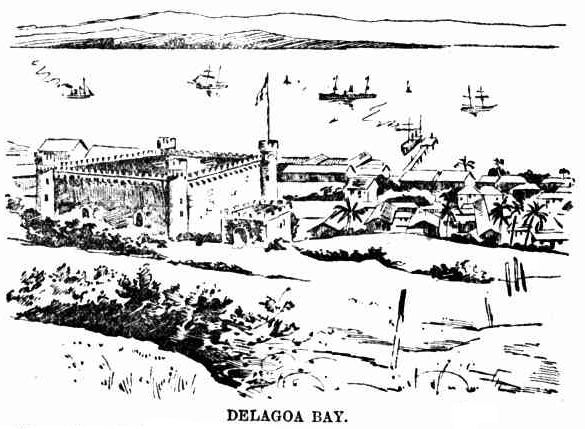
Bill Nasson, an internationally-recognized expert in South African history, wrote a timely piece on the current trends in scholarship surrounding the Boer War and how exciting these new studies are. In spite of their lack of originality, they are extremely valuable observes Nasson. What these studies benefit most from, in his opinion, is their "detached perspective." Lawrence James notes the frequency of wars in South Africa especially during the last half of the 19th century. But, contrary to many studies, these conflicts did not precipitate the Boer war. In fact, the cause of the war was a struggle over Delagoa Bay, a hitherto undeveloped harbor owned by the Portuguese on the southernmost tip of Mozambique. In Portuguese hands, it was worthless but if it were transformed into a modern harbor, it would be invaluable. Britain was not the only foreign power interested in Delagoa Bay and herein laid the crux of the problem. Delagoa Bay was what Sydney was in the Pacific, the greatest natural harbor in that part of the world and all the European powers knew it.

It was control over this relatively unknown harbor that led to war according to historian Peter Henshaw. Henshaw's study is in line with what Nasson sees as a truly profitable investigation in the Boer War: "if the latest work on the war is to further enrich our knowledge, then it needs to concern itself not only with the big questions and processes, but also with particular episodes and specific detail." Scholarship concerning the Boer war has been abundant but the significance of Delagoa Bay has been brushed aside by mainstream historical studies. This is a crucial omission in Henshaw's estimation. Throughout the 1890s, Britain seemed to have South Africa firmly within its grasp. But Britain feared that the Transvaal may gain access to the sea at Delagoa Bay and that a European power may establish a presence there as well. These were sober considerations because such a potentiality could severely weaken Britain's economic base in South Africa and escalate tensions with a rival Imperial power. As a precaution against such an outcome, an agreement was made between Great Britain and Portugal that stated Britain would be given first right of refusal if Portugal wished to cede any of her Imperial territories.
This was a masterful diplomatic stroke but they could not have anticipated the Anglo-German agreement of 1898. In order to soften relations between Great Britain and Germany, the Foreign Office concluded an agreement that would ease relations between both powers but inadvertently opened a quagmire in South Africa. "The crucial problem, unrecognized at first by the British foreign office negotiators of the Anglo-German agreement, was that the agreement included a clause that permitted the development of port facilities at Delagoa Bay by rival commercial firms." The Colonial Office was ignorant of the Foreign Office's dealings with Germany and was alarmed that Britain would relinquish sole control of commercial activities in the region. This was the Colonial Office's worst nightmare and they scrambled to salvage Britain's economic and strategic interests before they were outmaneuvered by the Transvaal or Germany or any other power. In an effort to promote peaceful relations with Germany, the British Foreign Office sabotaged Great Britain's foothold in South Africa and put the Colonial Office in a panic.

A great deal of capital investment flooded into South Africa for many years by British entrepreneurs. Furthermore, Great Britain had extended millions of pounds worth of credit to Cape Town and Natal. A commercial rival in Delagoa Bay could potentially exclude Britain from the gold industry and the especially lucrative transportation of gold to London. Moreover, trade with the Transvaal could come to an abrupt halt. Henshaw notes the limited attention historians have given to these economic concerns and particularly the "implications for gold flows of a rapid improvement and expansion of the Delagoa Bay route to the Witwatersrand." It was crucial for Britain to take measure and not let the situation devolve into chaos where they could no longer exert control. Many within the traditional school of African history have portrayed a British indifference to competing powers jockeying for position in Delagoa Bay. This, comments Henshaw, is not what the evidence shows: "concerns were repeatedly expressed within the British government, at least in the Colonial Office, that British trade with southern Africa was suffering, and would suffer further, from the discriminatory trade practices of rival powers." What the Colonial Office feared most was the Transvaal circumventing Britain completely with direct access to other commercial lobbies at Delagoa Bay via the railway. President Kruger's appeals to Germany were a grim reminder that the British were in a precarious situation that could ignite into full-scale war.

It was prescient of Lord Selborne to realize the dangerous situation Britain was now in and he made every effort to sway public opinion and his father-in-law to change tack. "Selborne explained that the railway would play a great part in determining the future of South Africa. If the railway were British controlled, the Transvaal would finally be forced to admit that ' their best interests lay in coming to a complete understanding with us'." An obstinate Portuguese government on the verge of collapse conspired to come to terms with Britain but Germany interceded before the deal took effect. The result was that Britain and Germany, through back-room negotiating, entered into the 1898 agreement that gave Britain the illusion that Germany was harmless in their push for commercial links to Delagoa Bay. A Colonial Office official, Henry Lambert, noted "I do not see what we have to gain from the improvement of Lourenco Marques [Delagoa Bay] – indeed the contrary." When news reached the Colonial Office about the Anglo-German agreement, nearly all officials within the administration pleaded ignorance about its scope. Lambert went so far as to state his understanding of the mechanics of the agreement was based on written reports outlined in a newspaper! Britain's position in South Africa had been jeopardized and only a new strategy would ensure that Britain remained a player in South Africa.

These factors combined hurt Britain's standing on the world stage. The perceived weakness tarnished Britain's prestige. It could change the geopolitical dynamics enjoyed by Britain throughout the latter half of the 19th century. Whether real or imagined, even the smallest chink in Britain's armor could be seen as an opportunity by another aggressive power itching to flex its muscle. If the Transvaal gained the upper hand, it could dictate policies in the region and supplant British paramountcy in the region. Likewise it "would quickly be seen as reflecting a major failure by Britain to assume practical control over this vital route to the Transvaal." In other words, Britain needed to restore the luster of her image and make an unequivocal statement that they were the dominate power and in full control. This assertive policy put them at odds with Kruger and his government who wanted to force Britain out of the region. Kruger's obstinacy proved the catalyst that pitted Britain and the Transvaal on a collision course that could only be remedied by war. Henshaw argues persuasively that the "Kruger regime's determination to fight rather than succumb made war inevitable." Britain had intended to avert war and smooth over any touchy issues through diplomacy but this sound strategy only proved effective in considering Germany as the potential threat while ignoring the simmering hostilities of the Transvaal. It was this miscalculation and the naiveté of the British Foreign Office that brought Britain to blows with the Transvaal over a harbor that was already controlled by the British. Only an incompetent bureaucracy could have launched Britain into a full-scale conflict over a harbor they already possessed!
1. Bill Nasson. "Waging Total War in South Africa: Some Centenary Writings on the Anglo-Boer War, 1899-1902." The Journal of Military History 66 (Jul. 2002)
2. Ibid, 817
3. Peter Henshaw. "The 'Key to South Africa' in the 1890s: Delagoa Bay and the Origins of the South African War." Journal of Southern African Studies 24 (Sep. 1998)
4. Ibid, 819
5. Henshaw, 528
6. Ibid, 532
7. Ibid
8. Ibid, 537
9. Ibid, 538
10. Henshaw, 540
11. Ibid, 541